

Open Instagram. Look at the last ten small brands that show up in your feed. The logos: clean serif, earthy palette, a little organic leaf. The packaging: minimalist kraft with matte gold details. The product photos: soft natural overhead light, gentle shadows, beige backdrop. The Reels: animated type, smooth transitions, chill house music.
They all look like the same brand.
They aren’t. But to a consumer who sees two hundred brands a day on social media, it makes no difference. And that “no difference” is the biggest problem in branding in 2026.
How we got here: from “blanding” to AI
This isn’t new. Bloomberg coined the term “blanding” in 2018, when it began documenting how DTC (direct-to-consumer) brands were following “a nearly identical formula of business model, look and feel, and tone of voice”[1]. Since then, brand consultancies like Siegel+Gale have warned that visual convergence is eroding differentiation[2].
What’s changed over the last three years is the scale and speed of the trend, driven by generative AI.
Until about five years ago, making a brand look “good” took three things: a good designer, a good photographer, and a good art director. That cost money, which made it a barrier. The brands that cleared it stood apart automatically, simply because they had the technical capability.
Today, generative AI tools like Midjourney, Adobe Firefly, Canva’s AI features, and Runway let anyone with a decent eye produce content that would have required a full creative studio three years ago. An entrepreneur in Antofagasta can now generate product photos on par with a global brand’s in fifteen minutes, with very little technical know-how.
That’s wonderful for democratization. It’s catastrophic for differentiation.
When the technical barrier disappears, everyone crosses the “looks good” line at the same time. The result, as Future Commerce put it, is the homogenization of experiences: a sea of brands that are technically flawless and, taken together, indistinguishable[3].
The hidden cost of homogenization
There’s a comfortable idea that goes, “If it works, copy it.” The argument is that if every brand is converging on this aesthetic, it must be because consumers like it. The problem is that recent research shows exactly the opposite: when consumers can’t tell two brands apart because their branding looks the same, they don’t remember them or prefer them. They confuse them[4].
A study published in the Journal of Business Research found that when the products in a portfolio are seen as too similar to one another, that perception ends up polarizing the consumer’s experience with each product and weakening their connection to the brand[4].
When everything looks the same, the brain stops registering the differences. Brands that invest in getting the “right look” aren’t building memory. They’re buying good-looking invisibility.
What actually sets brands apart today: four layers AI can’t replicate
The good news is that because the visual layer has been commoditized, the other layers of branding now carry more weight. There are four areas where a brand can still build real differentiation:
1. Editorial tone and voice. AI can imitate a visual style. It has a much harder time imitating an authentic voice with a point of view. Brands like Liquid Death, Oatly, and Duolingo built massive differentiation without a single “pretty” logo, relying only on a voice that’s consistent, opinionated, and instantly recognizable.
2. A cultural point of view. A brand that takes a clear stand on something is memorable. A brand that just “looks good” isn’t. Patagonia has a stance. Lush has a stance. The skincare brand in your feed with beige kraft and a modern serif doesn’t, and that’s why nobody remembers it.
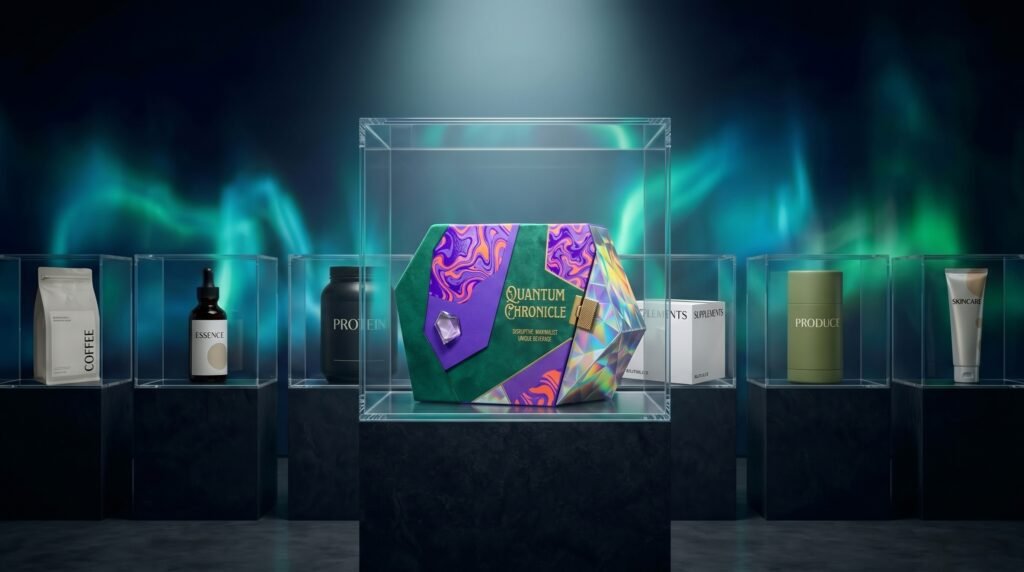
3. Deliberate visual asymmetry. The brands standing out today are the ones breaking AI’s patterns: intentionally ugly typefaces, loud colors no algorithm would recommend, raw photography, odd packaging. It’s the opposite of the strategy that made minimalism shine in 2018. If everything is minimal, maximal stands out.
4. A systemic identity structure. A pretty AI-generated logo isn’t a brand. A brand is a hundred consistent decisions, from the color of a button in the app to the tone of the post-purchase email. AI tools still can’t deliver that systemic coherence, because it takes human strategy that understands the business, the customer, and the cultural context.
How to build a brand in the age of AI
For any business owner or Head of Marketing planning a visual identity today, the right question is no longer “How do we look good?” That one answers itself. The right question is “How do we look different, and consistent?”
That takes three things AI doesn’t provide:
- A real diagnosis of your category’s visual landscape: what everyone else is doing, where the white space is, and which codes you can break without losing credibility.
- A strategic decision on voice, tone, and stance: what your brand says, what it doesn’t say, what it’s against, what it’s for. In short, where it stands.
- A systemic identity: not just a logo, but a hundred application decisions that keep things consistent at every touchpoint.
AI will keep getting better. The visual layer will keep getting cheaper. And that’s exactly why, paradoxically, the value of real brand strategy (human, strategic, opinionated) will keep going up.
In a sea of pretty logos, the only way not to drown is to have something to say. And that, for now, is still people’s work.
Sources
[1] Flux Branding (roundup referencing Bloomberg’s original coverage of “blanding”) — fluxbranding.com
[2] Siegel+Gale, “Rejuvenate Your Brand and Avoid the Blanding Trend” — siegelgale.com
[3] Future Commerce, “Visions Episode 7: The Homogenization of Experiences” — futurecommerce.com
[4] Journal of Business Research, “If all their products seem the same…: How brand homogeneity polarizes product experiences” — sciencedirect.com